
The Making of 'I Am Sun Mu' – an Interview with Director Adam Sjoberg

Filmmaker and photographer Adam Sjoberg has been working for the last two and a half years on a new documentary about our friend and renowned resettled North Korean artist Sun Mu. The film, titled I Am Sun Mu, follows Sun Mu as he prepares a new exhibition. We have known Adam for a while—he directed Danny From North Korea—but he is also known for previous works such as Shake the Dust and many other internationally-recognized films.
Check out our interview below with Adam on his most recent documentary.

When did you begin working on I Am Sun Mu?
Justin Wheeler introduced me to Sun Mu in January of 2013. We had dinner and discussed the possibility of doing a documentary about his life and work. Because Sun Mu can’t show his face and has to go to great lengths to protect his identity, he was understandably careful about getting involved in a feature film about his life. However, because of the long-term relationship he’s built with LiNK, and my approach to filmmaking, he decided it was a good partnership. I’m super thankful that he said yes. A year after we initially met, he was invited to China to show his work in a solo exhibition. This was an unprecedented event for a North Korean artist—and a bold decision on the part of the curator. I decided this was a perfect opportunity to film him and use the exhibit as a narrative arc with which to tell the rest of his story.
What was your favorite part of the process?
The whole filming process has been a joy to work on. I loved some of the quieter moments of filming it when it would just be Sun Mu and me in his studio. He would be painting or working away on a piece, and I would just be a “fly on the wall” filming. That collaborative effort was really inspiring. I’ve also loved working with a team of creatives that are so talented. Mariana Blanco, our editor, has been crucial to getting the film completed. Ryan Wehner has been making some beautiful animations of Sun Mu’s work that really help bring Sun Mu’s back-story to life. And composer Joel P. West has been working on a unique and beautiful thematic score to round out the film. I love working as a team with people that inspire me.

What are some cool things you learned while you filmed?
There has been so many things that I’ve learned. I already had a basic knowledge of the history of the Korean peninsula, but I’ve learned even more about it—as well as the nuances of the Kim’s rule and influence on every portion of North Korean life. Hearing Sun Mu discuss his life in North Korea, as well as his process of “un-brainwashing” after he left was fascinating. But most importantly, developing a friendship with Sun Mu over the last two years has helped me see past the politics and stereotypes surrounding the issue. Part of the beauty of Sun Mu’s paintings is that they don’t sit in any particular political space. He misses his homeland and longs for a more idealized, free North Korea. His work reflects his torn heart: He is not North Korean or South Korean. He’s simply Korean, which is why so many of his paintings focus on the idea of reunification, which is often seen as an archaic solution to the future of the two Koreas. But I don’t think he’s painting about reunification because he’s sure it will happen, only that he hopes it will.
What was most challenging for you with creating the documentary?
I don’t want to give too much away, but things did not go as expected at Sun Mu’s exhibit. That created safety and security challenges. Beyond that, making a feature-length film is a tough job. There are so many parts of Sun Mu’s life that I wish I could tell. The more I filmed him, the more I wanted to include. But in the end, you have to decide what stories push the overall narrative forward and keep people interested. It was tough to lose some scenes, but there are always DVD extras!

Do you have a favorite scene?
Can I pick two? My favorite is probably a scene where Sun Mu describes the day he escaped. It’s mostly a compilation of his paintings brought to life with animation. Afterwards, Sun Mu sings a song while playing the guitar that he used to play back in North Korea. Another favorite scene is of Sun Mu painting with his daughters. He then describes a couple of paintings he made of them—one of which is of his oldest daughter holding a “letter that cannot be sent” to her grandmother. It’s powerful.
Why do you create documentaries? Why did you choose to do this one in particular?
I create documentaries because I have a passion for helping people tell their stories. I love the genre because of how it opens up people’s eyes to the world. Ever since getting involved with Liberty in North Korea back in 2010, I’ve been interested in this issue. The crisis in North Korea is often overlooked, thought of only in terms of its politics, and is considered by many to be a complicated “cause” in which to be involved. I’ve worked with commercial brands that haven’t wanted to align themselves with LiNK because their manufacturing is in China. But it’s one of the greatest ongoing tragedies in the world today—and I’m proud to be associated even a little bit with what LiNK is fearlessly doing.

Who is this documentary for?
Hopefully it’s for everyone. We tried to make a film that is not just about North Korea, but about a person—an artist. It has a little bit of everything in it: a few laughs, a story of family, a story of escape, and a story of an artist trying to make it. Sun Mu is a very poetic person, and so I think people will be drawn in by his narrative.
What are you most excited for people to see in the documentary?
The climax of the film is pretty exciting and emotional, but I’m most excited for people just to get to know Sun Mu.
Why should people watch this? Why is this important?
As I’ve mentioned above, this is an issue that is often only seen in the media regarding it’s politics, or else in comedies or shock-docs. I want people to see a more human side: to not walk away thinking of the Kims, but of the many people in North Korea who live under one of the most oppressive regime in the world. Not just of their plight, but of their potential.
Where/when can someone see the documentary?
There will be a website up soon with more information. It will take some time before we secure international and domestic distribution. Stay tuned to what LiNK is doing. We’ll try to keep everyone in the loop once it’s out for the world to see!
UPDATE: January 2017! We're excited to announce that I Am Sun Mu is now available on Netflix, iTunes, Amazon, YouTube, and other video on demand platforms! Watch it, rate it, and share!
Want some of Sun Mu's art for your home? Check out the Sun Mu canvas prints on the LiNK Shop!
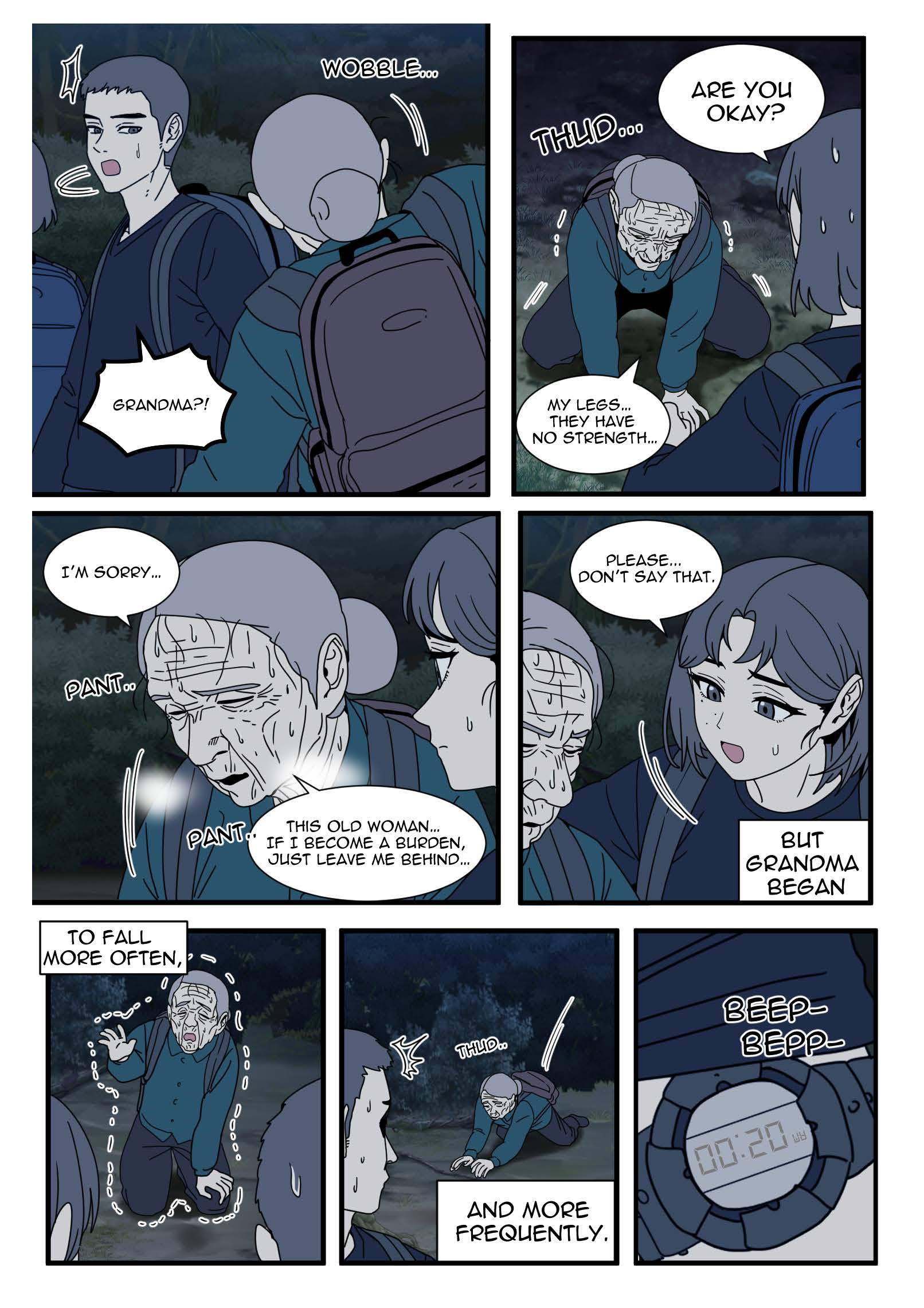
Webcomic: Escape From North Korea
By: Ju Ok Jeon
This webtoon, created by North Korean escapee Ju Ok Jeon, reflects the real risks many North Koreans face when fleeing their home in search of safety, dignity, and the chance to live freely.




About the Artist
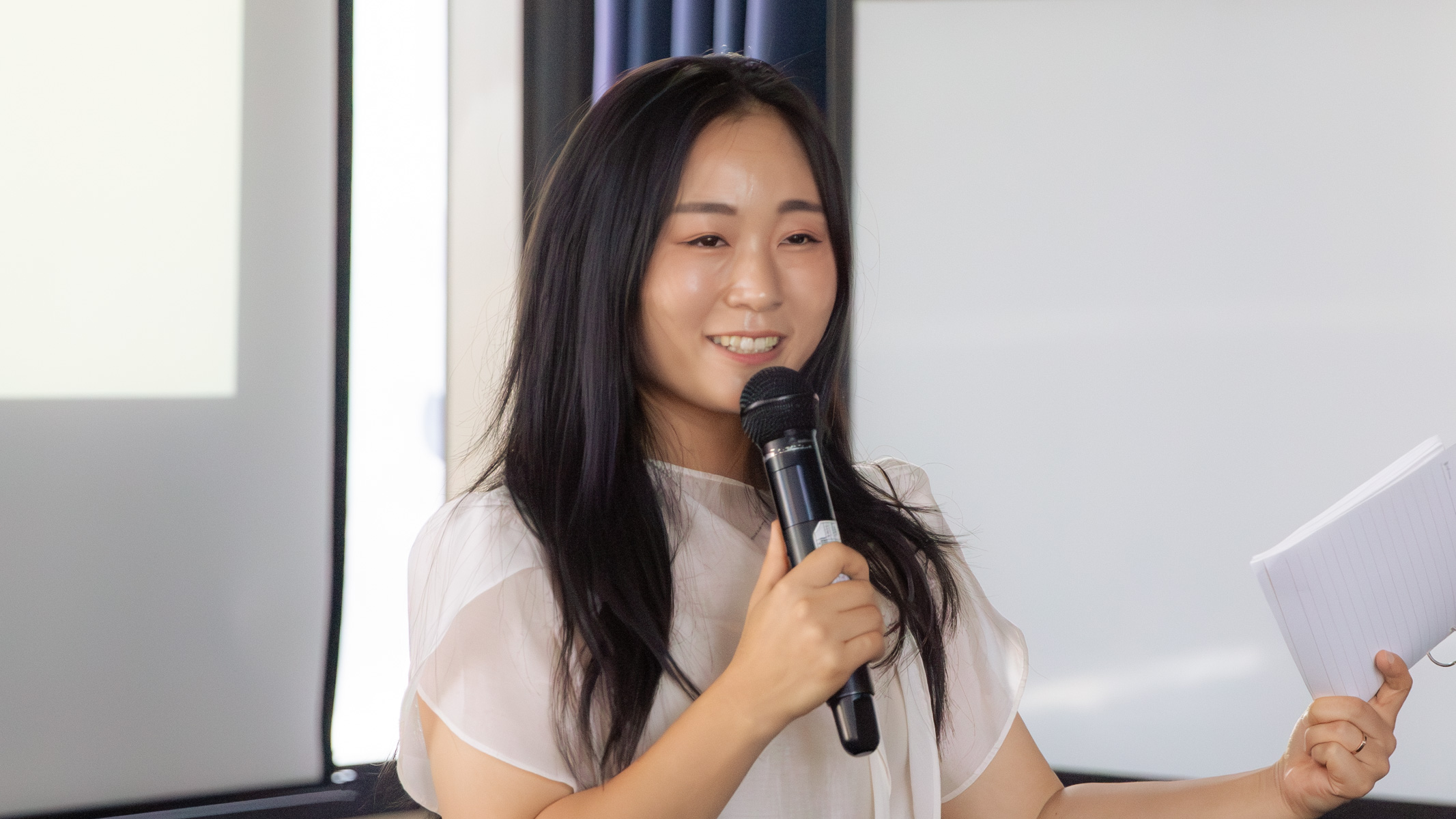
Ju Ok Jeon is a North Korean defector who escaped in 2013. Having lived under the Kim Jong Un regime in an oppressed land, she conveys—through webtoons and comics—how precious the values of freedom and dignity truly are, with both sincerity and storytelling power.
Support Ju Ok’s work: @unistudio_juok
From Artist to Activist
As a kid in North Korea, Ju Ok was famous at school for one thing—drawing portraits of people passing gas. Her classmates flocked to her, asking to be drawn in exchange for snacks and even small amounts of money. Nothing made Ju Ok happier than to see people’s faces light up with a big smile, and to laugh together over her creations.
But things came to a halt when a teacher pulled her aside for “disrupting the school environment” with her “unrevolutionary” drawings. Ju Ok’s art supplies were confiscated, and she was warned that her parents could be punished for failing to educate their children.
“I vowed to never draw again because my simple drawings could bring harm to my family. But no matter how hard I studied or worked, opportunities were limited because my family belonged to the labor class. After a relative defected, my social classification [songbun] fell, leaving me destined for a life of forced labor. Realizing there was no hope or future, I decided to escape.”
In freedom, Ju Ok found that there was a lack of public understanding and empathy about North Korean human rights. A few years ago, her husband, who is also an artist, encouraged her to try drawing again.
“After being severely scolded as a child, I hated anything related to drawing. But when my husband told me I have talent, I got chills—thinking, ‘Did I actually used to like this?’
Through illustration, I want to share the reality of North Korea I experienced, my journey toward freedom, and my resettlement in a free society—so the world can hear the voices of those who still long for freedom inside North Korea.”
Ju Ok hopes her art will reach more people and increase support for this issue. In 2025, she participated in the LiNK English Speech Program to hone her storytelling and English speaking abilities.
“The North Korean issue is not only a domestic matter on the Korean Peninsula but also a complex international issue. That is why it is vital to raise awareness globally—and for North Korean defectors to share their stories directly in English. LiNK’s program has played an important role in helping me move toward my life goals.”
Reimagining North Korea’s Future
Liberty in North Korea helps North Koreans reach freedom and reach their full potential through programs that build their capacity to succeed and lead change. With the right support and tools, they’re sharing their stories, utilizing their talents, and building their careers with unwavering purpose—to create a future where every North Korean person can live free and full lives.
Invest in the next generation of North Korean advocates, storytellers, changemakers, and entrepreneurs, like Ju Ok.


